A-Level Maths Edexcel (9MA0)

#1.8.5 Integration by substitution and by parts

16 questions
  • Question 1
    5 marks

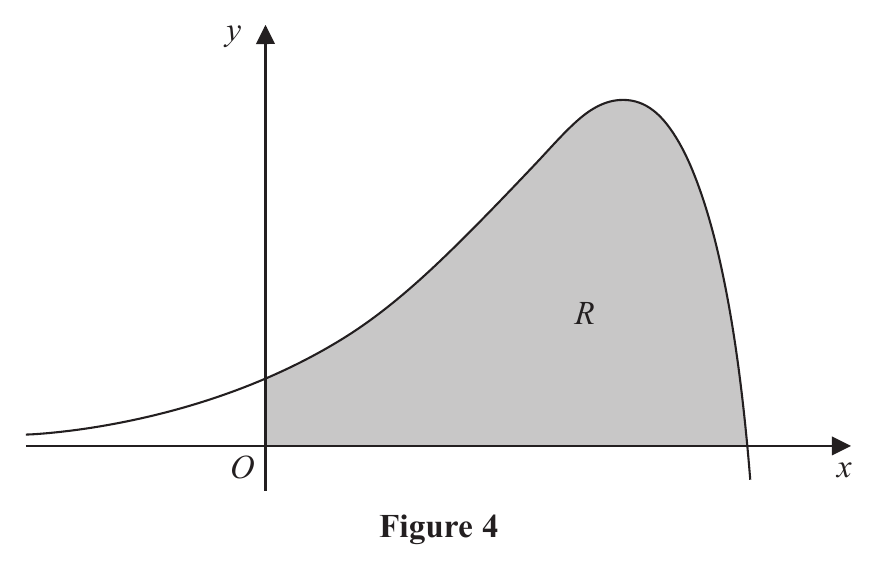
    Figure 4 shows a sketch of part of the curve with equation

    y=2e2x−xe2x,x∈Ry = 2e^{2x} - xe^{2x}, \quad x \in \mathbb{R}

    The finite region RR, shown shaded in Figure 4, is bounded by the curve, the xx-axis and the yy-axis.

    Use calculus to show that the exact area of RR can be written in the form pe4+qpe^4 + q, where pp and qq are rational constants to be found.
    (Solutions based entirely on graphical or numerical methods are not acceptable.)

    (Total for Question 7 is 5 marks)

    From A-Level Maths Edexcel (9MA0) - Paper 1, Specimen 2018 - Question 7
  • Question 2
    8 marks

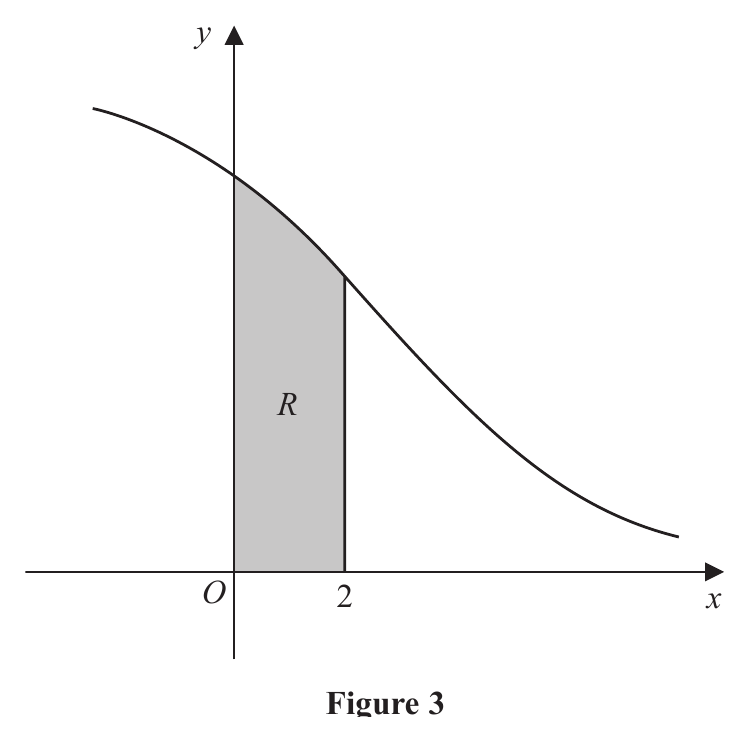
    Figure 3 shows a sketch of part of the curve with equation

    y=6e12x+4x∈Ry = \dfrac{6}{e^{\frac{1}{2}x} + 4} \qquad x \in \mathbb{R}

    The finite region RR, shown shaded in Figure 3, is bounded by the curve, the yy-axis, the xx-axis, and the line with equation x=2x = 2

    (a) Use the substitution u=e12xu = e^{\frac{1}{2}x} to show that the area of RR can be given by

    ∫ab12u(u+4) du\int_a^b \dfrac{12}{u(u+4)}\,du

    where aa and bb are constants to be found.
    (3 marks)

    (b) Hence use algebraic integration to show that the exact area of RR is 3ln⁡(5ee+4)3\ln\left(\dfrac{5e}{e+4}\right)
    (5 marks)

    (Total for Question 6 is 8 marks)

    From A-Level Maths Edexcel (9MA0) - Paper 1, Practice Set 1 - Question 6
  • Question 3
    10 marks

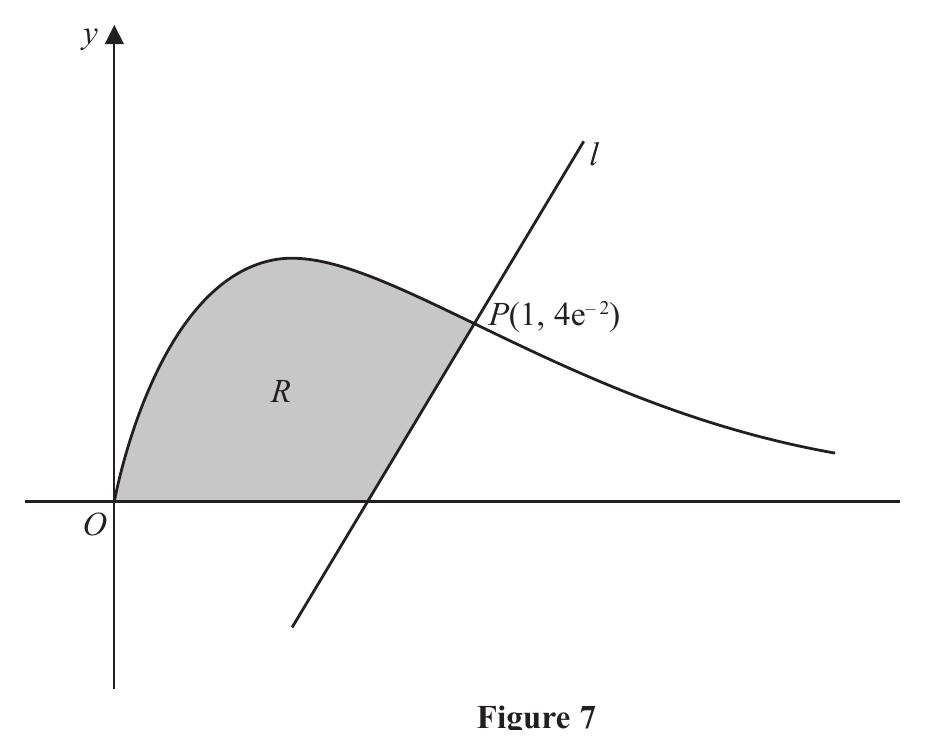
    Figure 7 shows a sketch of the curve with equation

    y=4xe−2xx⩾0y = 4xe^{-2x} \quad x \geqslant 0

    The line ll is the normal to the curve at the point P(1,4e−2)P(1, 4e^{-2})

    The finite region RR, shown shaded in Figure 7, is bounded by the curve, the line ll, and the xx-axis.

    Find the exact value of the area of RR.

    (Solutions based entirely on graphical or numerical methods are not acceptable.)

    (Total for Question 14 is 10 marks)

    From A-Level Maths Edexcel (9MA0) - Paper 1, Practice Set 1 - Question 14
  • Question 4
    10 marks

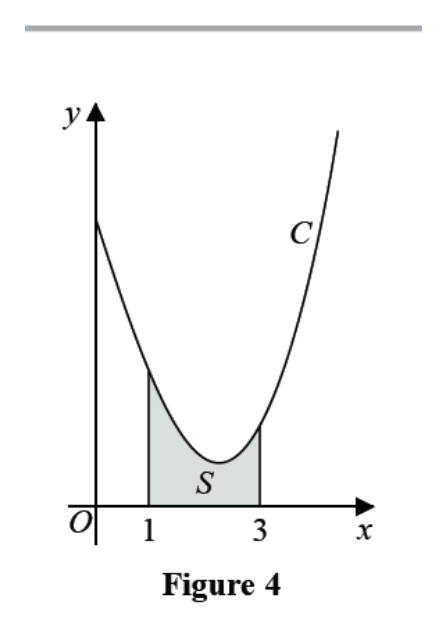
    Figure 4 shows a sketch of part of the curve CC with equation

    y=x2ln⁡x3−2x+5,x>0y = \dfrac{x^2 \ln x}{3} - 2x + 5, \quad x > 0

    The finite region SS, shown shaded in Figure 4, is bounded by the curve CC, the line with equation x=1x = 1, the xx-axis and the line with equation x=3x = 3

    The table below shows corresponding values of xx and yy with the values of yy given to 4 decimal places as appropriate.

    xx11.522.53
    yy32.30411.92421.90892.2958

    (a) Use the trapezium rule, with all the values of yy in the table, to obtain an estimate for the area of SS, giving your answer to 3 decimal places.
    (3 marks)

    (b) Explain how the trapezium rule could be used to obtain a more accurate estimate for the area of SS.
    (1 mark)

    (c) Show that the exact area of SS can be written in the form ab+ln⁡c\dfrac{a}{b} + \ln c, where aa, bb and cc are integers to be found.
    (6 marks)

    (In part c, solutions based entirely on graphical or numerical methods are not acceptable.)

    (Total for Question 14 is 10 marks)

    From A-Level Maths Edexcel (9MA0) - Paper 1, Specimen 2017 - Question 14
  • Question 5
    7 marks

    Show that

    ∫022xx+2 dx=3215(2+2)\displaystyle\int_0^2 2x\sqrt{x+2}\,dx = \dfrac{32}{15}\left(2+\sqrt{2}\right)

    (Total for Question 13 is 7 marks)

    From A-Level Maths Edexcel (9MA0) - Paper 1, Jun-2018 - Question 13
  • Question 6
    10 marks

    (a) Use the substitution x=u2+1x = u^2 + 1 to show that

    ∫5103 dx(x−1)(3+2x−1)=∫pq6 duu(3+2u)\displaystyle\int_{5}^{10} \dfrac{3\,dx}{(x-1)\left(3+2\sqrt{x-1}\right)} = \int_{p}^{q} \dfrac{6\,du}{u(3+2u)}

    where pp and qq are positive constants to be found.
    (4 marks)

    (b) Hence, using algebraic integration, show that

    ∫5103 dx(x−1)(3+2x−1)=ln⁡a\displaystyle\int_{5}^{10} \dfrac{3\,dx}{(x-1)\left(3+2\sqrt{x-1}\right)} = \ln a

    where aa is a rational constant to be found.
    (6 marks)

    (Total for Question 10 is 10 marks)

    From A-Level Maths Edexcel (9MA0) - Paper 1, Oct-2020 - Question 10
  • Question 7
    8 marks

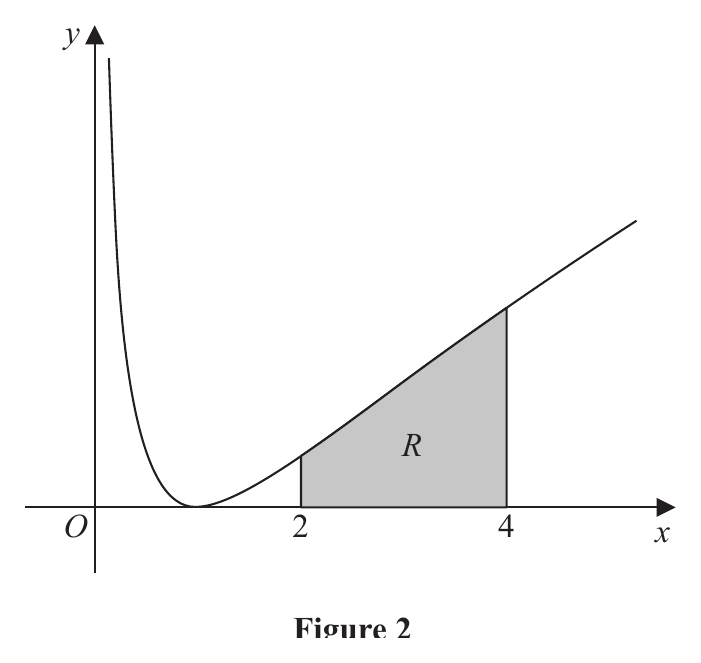
    Figure 2 shows a sketch of part of the curve with equation

    y=(ln⁡x)2x>0y = (\ln x)^2 \qquad x > 0

    The finite region RR, shown shaded in Figure 2, is bounded by the curve, the line with equation x=2x = 2, the xx-axis and the line with equation x=4x = 4

    The table below shows corresponding values of xx and yy, with the values of yy given to 4 decimal places.

    xx22.533.54
    yy0.48050.83961.20691.56941.9218

    (a) Use the trapezium rule, with all the values of yy in the table, to obtain an estimate for the area of RR, giving your answer to 3 significant figures.
    (3 marks)

    (b) Use algebraic integration to find the exact area of RR, giving your answer in the form

    y=a(ln⁡2)2+bln⁡2+cy = a(\ln 2)^2 + b\ln 2 + c

    where aa, bb and cc are integers to be found.
    (5 marks)

    (Total for Question 11 is 8 marks)

    From A-Level Maths Edexcel (9MA0) - Paper 1, Nov-2021 - Question 11
  • Question 8
    5 marks

    In this question you must show all stages of your working.

    Solutions relying on calculator technology are not acceptable.

    Show that

    ∫1e2x3ln⁡x dx=ae8+b\displaystyle\int_1^{e^2} x^3 \ln x \, dx = ae^8 + b

    where aa and bb are rational constants to be found.

    (Total for Question 12 is 5 marks)

    From A-Level Maths Edexcel (9MA0) - Paper 1, Jun-2022 - Question 12
  • Question 9
    10 marks

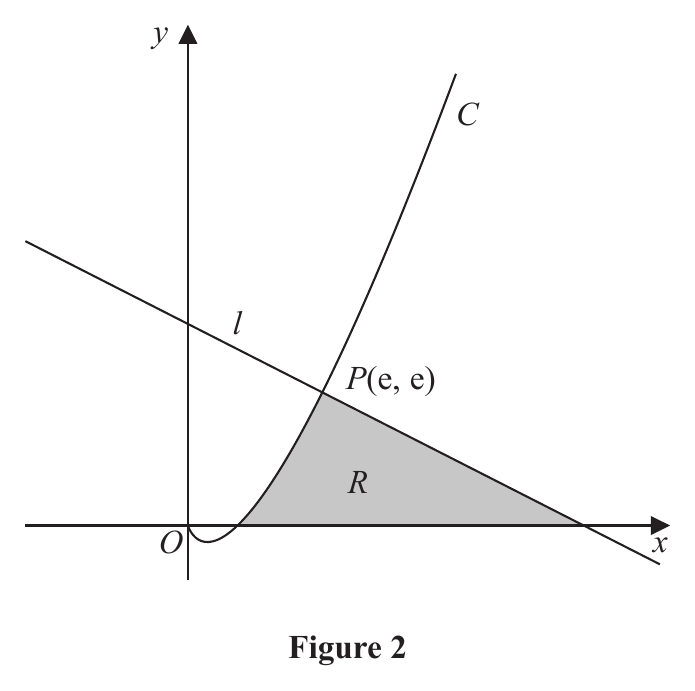
    Figure 2 shows a sketch of part of the curve CC with equation y=xln⁡x,x>0y = x \ln x, \quad x > 0

    The line ll is the normal to CC at the point P(e,e)P(\text{e}, \text{e})

    The region RR, shown shaded in Figure 2, is bounded by the curve CC, the line ll and the xx-axis.

    Show that the exact area of RR is Ae2+BA\text{e}^2 + B where AA and BB are rational numbers to be found.

    (Total for Question 13 is 10 marks)

    From A-Level Maths Edexcel (9MA0) - Paper 2, Jun-2018 - Question 13
  • Question 10
    15 marks

    (a) Use the substitution u=4−hu = 4 - \sqrt{h} to show that

    ∫dh4−h=−8ln⁡∣4−h∣−2h+k\int \dfrac{dh}{4 - \sqrt{h}} = -8\ln\left|4 - \sqrt{h}\right| - 2\sqrt{h} + k

    where kk is a constant
    (6 marks)

    A team of scientists is studying a species of slow growing tree.

    The rate of change in height of a tree in this species is modelled by the differential equation

    dhdt=t0.25(4−h)20\dfrac{dh}{dt} = \dfrac{t^{0.25}\left(4 - \sqrt{h}\right)}{20}

    where hh is the height in metres and tt is the time, measured in years, after the tree is planted.

    (b) Find, according to the model, the range in heights of trees in this species.
    (2 marks)

    One of these trees is one metre high when it is first planted.

    According to the model,

    (c) calculate the time this tree would take to reach a height of 12 metres, giving your answer to 3 significant figures.
    (7 marks)

    (Total for Question 14 is 15 marks)

    From A-Level Maths Edexcel (9MA0) - Paper 2, Jun-2019 - Question 14
  • Question 11
    7 marks

    (a) Use the substitution u=1+xu = 1 + \sqrt{x} to show that

    ∫016x1+x dx=∫pq2(u−1)3u du\displaystyle\int_{0}^{16} \dfrac{x}{1+\sqrt{x}}\,dx = \int_{p}^{q} \dfrac{2(u-1)^3}{u}\,du

    where pp and qq are constants to be found.
    (3 marks)

    (b) Hence show that

    ∫016x1+x dx=A−Bln⁡5\displaystyle\int_{0}^{16} \dfrac{x}{1+\sqrt{x}}\,dx = A - B \ln 5

    where AA and BB are constants to be found.
    (4 marks)

    (Total for Question 12 is 7 marks)

    From A-Level Maths Edexcel (9MA0) - Paper 2, Nov-2021 - Question 12
  • Question 12
    8 marks

    (a) Given that aa is a positive constant, use the substitution x=asin⁡2θx = a\sin^2 \theta to show that

    ∫0ax12a−x dx=12a2∫0π2sin⁡22θ dθ\displaystyle\int_{0}^{a}x^{\frac{1}{2}}\sqrt{a - x}\,\mathrm{d}x = \frac{1}{2} a^{2}\int_{0}^{\frac{\pi}{2}}\sin^{2}2\theta \,\mathrm{d}\theta

    (4 marks)

    (b) Hence use algebraic integration to show that

    ∫0ax12a−x dx=kπa2\displaystyle\int_{0}^{a}x^{\frac{1}{2}}\sqrt{a - x}\,\mathrm{d}x = k\pi a^{2}

    where kk is a constant to be found.
    (4 marks)

    (Total for Question 13 is 8 marks)

    From A-Level Maths Edexcel (9MA0) - Paper 1, Jun-2024 - Question 13
  • Question 13
    5 marks

    In this question you must show all stages of your working.

    Solutions relying entirely on calculator technology are not acceptable.

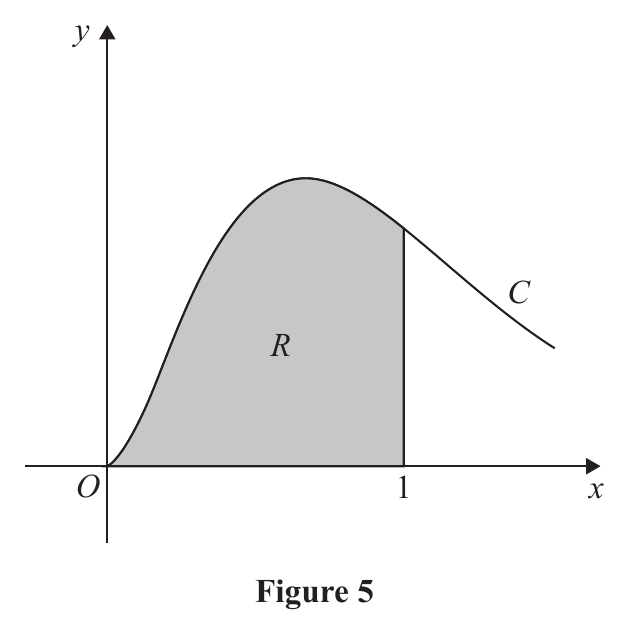
    Figure 5 shows a sketch of part of the curve CC with equation

    y=8x2e−3xx⩾0y = 8x^2 e^{-3x} \qquad x \geqslant 0

    The finite region RR, shown shaded in Figure 5, is bounded by

    • the curve CC
    • the line with equation x=1x = 1
    • the xx-axis

    Find the exact area of RR, giving your answer in the form

    A+Be−3A + Be^{-3}

    where AA and BB are rational numbers to be found.

    (Total for Question 11 is 5 marks)

    From A-Level Maths Edexcel (9MA0) - Paper 2, Jun-2024 - Question 11
  • Question 14
    5 marks

    In this question you must show all stages of your working.

    Solutions relying on calculator technology are not acceptable.

    Show that

    ∫02x(2x+1)3 dx=225\displaystyle\int_0^2 \dfrac{x}{(2x+1)^3}\,dx = \dfrac{2}{25}

    (Total for Question 13 is 5 marks)

    From A-Level Maths Edexcel (9MA0) - Paper 1, Jun-2025 - Question 13
  • Question 15
    7 marks

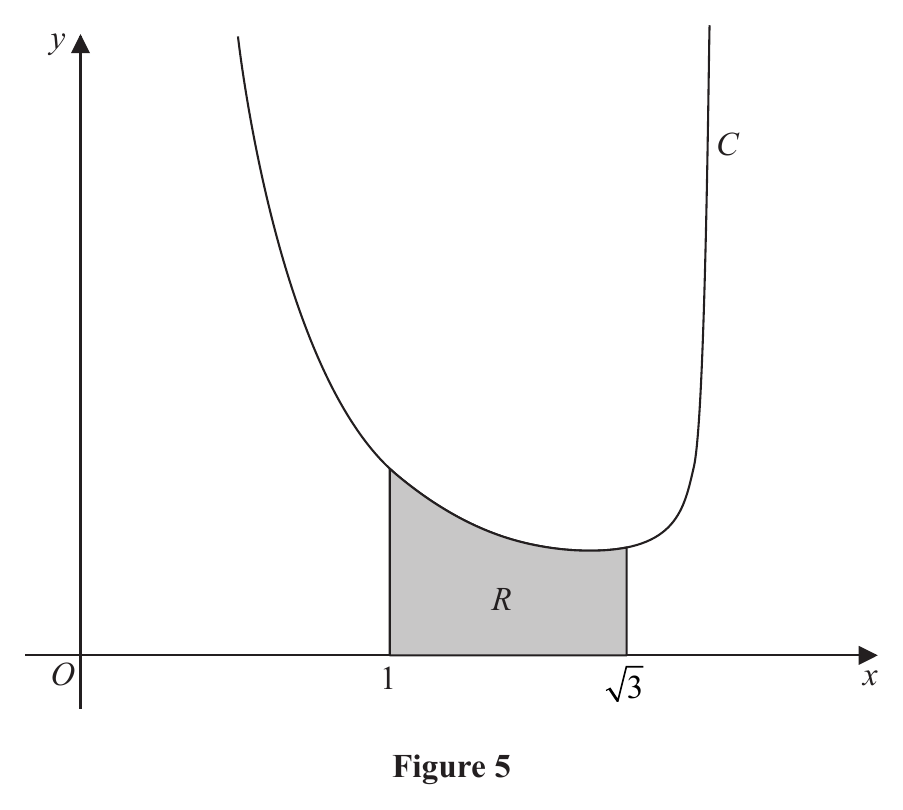
    Figure 5 shows a sketch of the curve CC with equation

    y=1x24−x20<x<2y = \dfrac{1}{x^2\sqrt{4 - x^2}} \qquad 0 < x < 2

    The region RR, shown shaded in Figure 5, is bounded by CC, the line with equation x=1x = 1, the xx-axis and the line with equation x=3x = \sqrt{3}

    (a) Use the substitution x=2sin⁡ux = 2\sin u to show that the area of RR is given by

    ∫abkcosec⁡2u du\displaystyle\int_a^b k\cosec^2 u\,du

    where aa, bb and kk are constants to be found.
    (4 marks)

    (b) Hence, using algebraic integration, find the exact area of RR.
    Give your answer in simplest form.
    (3 marks)

    (Total for Question 16 is 7 marks)

    From A-Level Maths Edexcel (9MA0) - Paper 1, Jun-2025 - Question 16
  • Question 16
    13 marks

    In this question you must show all stages of your working.
    Solutions relying on calculator technology are not acceptable.

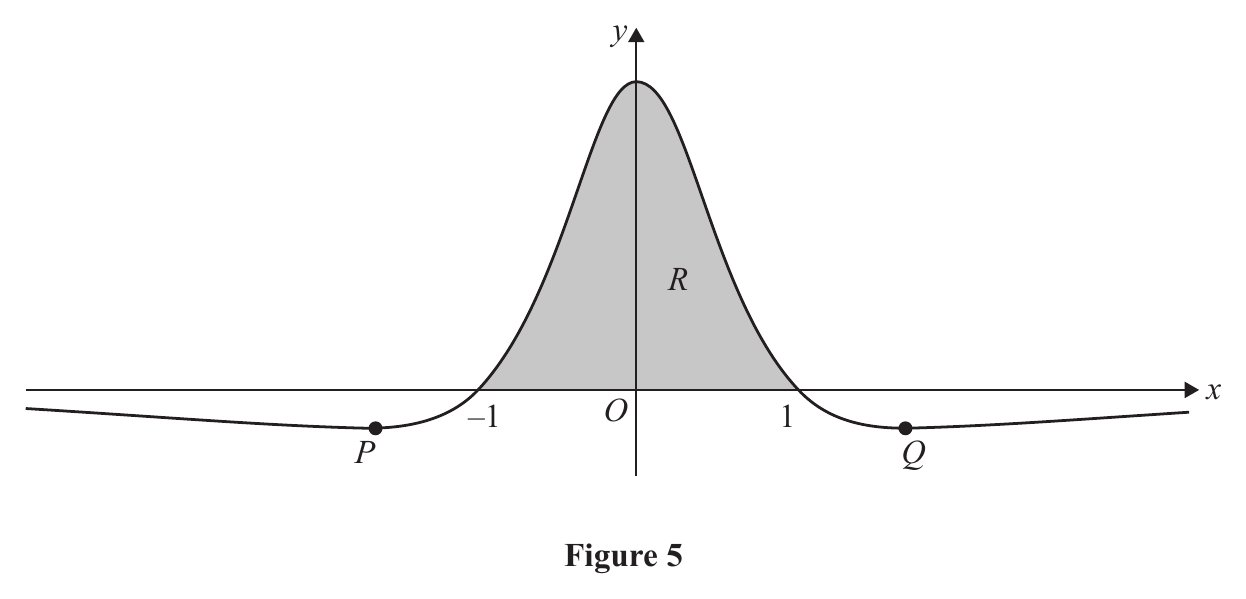
    Figure 5 shows a sketch of part of the curve with equation y=f(x)y = \text{f}(x), where

    f(x)=1−x2(1+x2)2\text{f}(x) = \dfrac{1 - x^2}{\left(1 + x^2\right)^2}

    The curve

    • intersects the xx-axis at −1-1 and 11
    • has minimum turning points at PP and QQ

    as shown in Figure 5.

    (a) Use calculus to find the exact coordinates of PP.
    (5 marks)

    (b) Using the substitution x=tan⁡θx = \tan \theta show that

    ∫−11f(x) dx=∫αβcos⁡2θ dθ\displaystyle\int_{-1}^{1} \text{f}(x)\,dx = \int_{\alpha}^{\beta} \cos 2\theta\,d\theta

    where α\alpha and β\beta are constants to be found.
    (5 marks)

    The finite region RR, shown shaded in Figure 5, is bounded by the xx-axis and the curve.

    (c) Use algebraic integration to find the area of RR.
    (3 marks)

    (Total for Question 15 is 13 marks)

    From A-Level Maths Edexcel (9MA0) - Paper 2, Jun-2025 - Question 15